





A Little Flag Can Spark Big Learning Moments
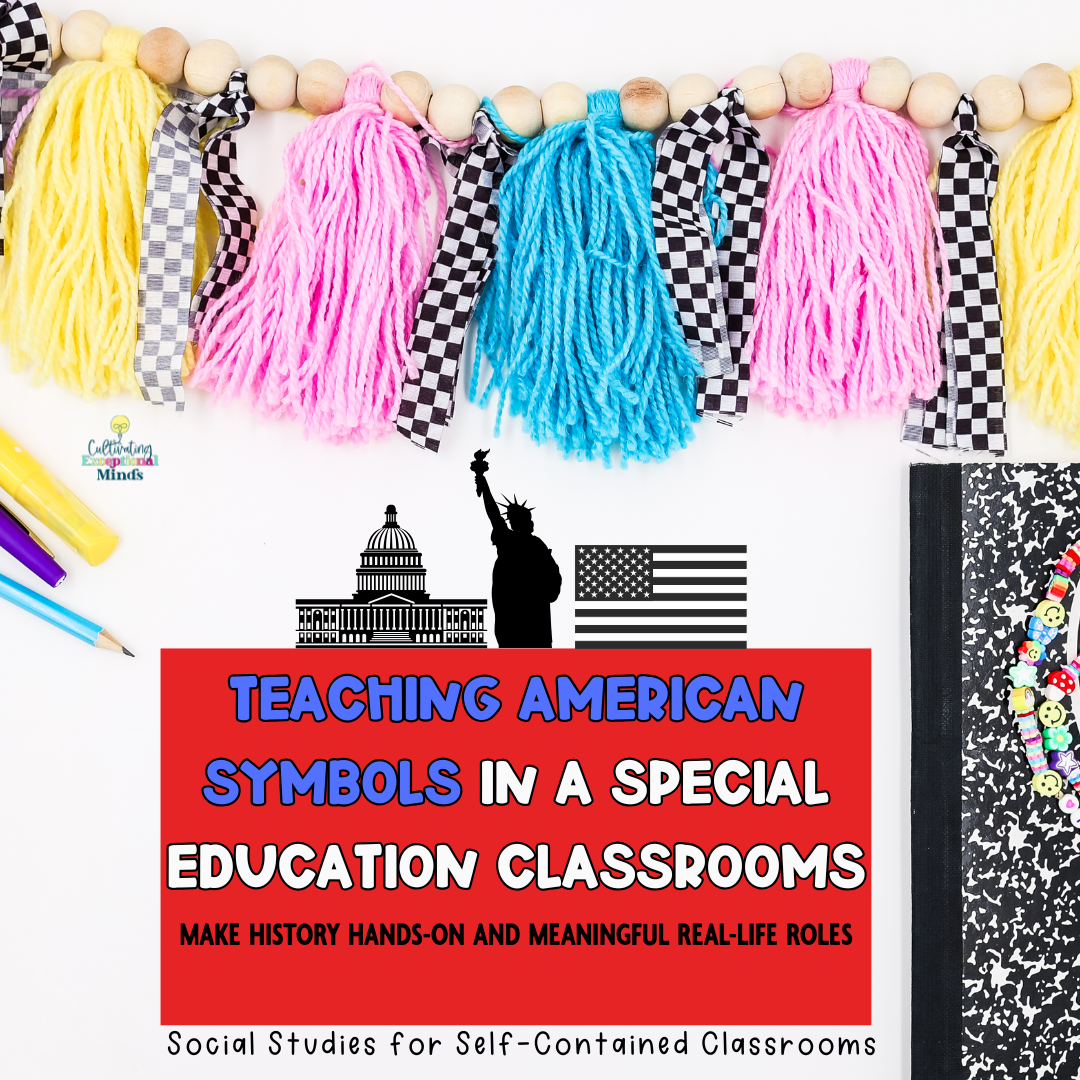
The first time I handed out mini American flags during our Presidents’ Day unit, one of my nonverbal students waved it proudly and signed “USA.” That small moment showed me how teaching American symbols can help students connect with something bigger than themselves.
Symbols like the Statue of Liberty or the bald eagle aren’t just part of history—they’re part of our national identity. For our learners, especially in self-contained classrooms, we need to adapt how we teach these important concepts so every student can access them.
What Are American Symbols, and Why Do They Matter in Special Ed?
American symbols are images, landmarks, or icons that represent the values and history of the United States. Think flags, eagles, the Liberty Bell, or Mount Rushmore.
For our students, teaching these symbols:
- Builds background knowledge and cultural understanding
- Supports communication skills through vocabulary and discussion
- Encourages visual recognition and matching skills
- Ties into holidays like Presidents’ Day and Fourth of July
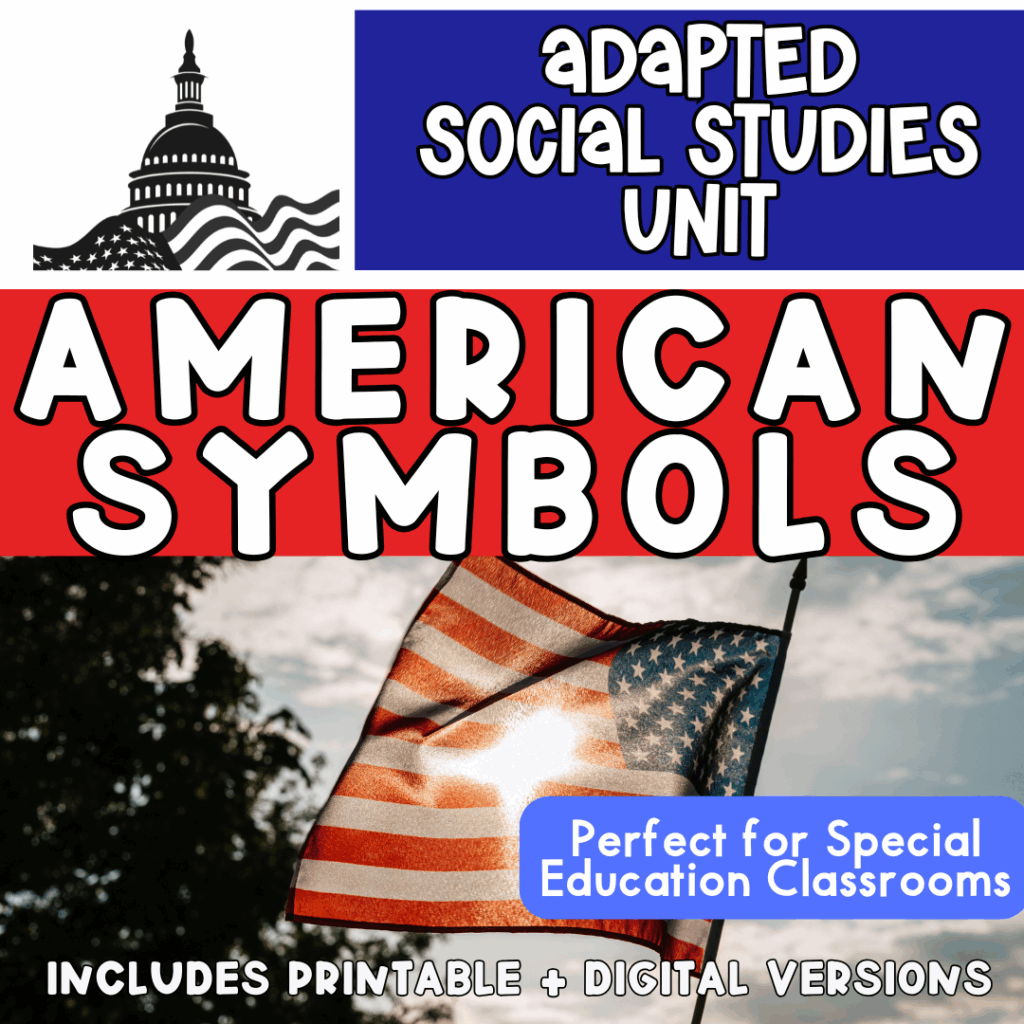
What If My Students Don’t Understand Abstract Concepts Like Freedom or Patriotism?
You’re not alone! Start simple. Show the symbol (like a flag) and describe what it is, where they may have seen it, and what it represents. Repetition is key, and pairing visuals with real-life examples makes it more concrete.
Lesson Plan Example Using the American Symbols TpT unit
📅 Monday: Read the adapted book about American symbols together as a class. Use real photos and symbols.
🧠 Tuesday: Match symbols to their names using file folders and sorting tasks.
🖍️ Wednesday: Create a craft or coloring activity for the American flag or Statue of Liberty.
🖥️ Thursday: Use Google Slides for digital practice matching symbols to meanings.
🎉 Friday: Wrap up with a classroom mini-museum where students showcase what they learned.
Story Time: The Power of the Bald Eagle Picture
One student in my class with very limited speech loved animals. When we introduced the bald eagle as a symbol of strength and freedom, his face lit up. We made a paper plate eagle craft, and he kept pointing at it all week, proudly showing it to his para. These connections matter.
List: Top 5 Adapted Activities for Teaching American Symbols
- Adapted books with real photos
- Symbol sorting tasks (cut/paste or file folders)
- Interactive digital slides
- Holiday tie-ins like Presidents’ Day or Flag Day
- Anchor charts with visuals and matching cards
Try the Freebie! Want to test the waters first? Grab this Social Studies Freebie with visuals, sorting tasks, and a sample from our American Symbols unit: Download it here
American Symbols Special Education Unit ✅ Real images of symbols ✅ Adapted reading passages ✅ File folder tasks ✅ Interactive Google Slides ✅ Holiday-friendly and IEP-aligned
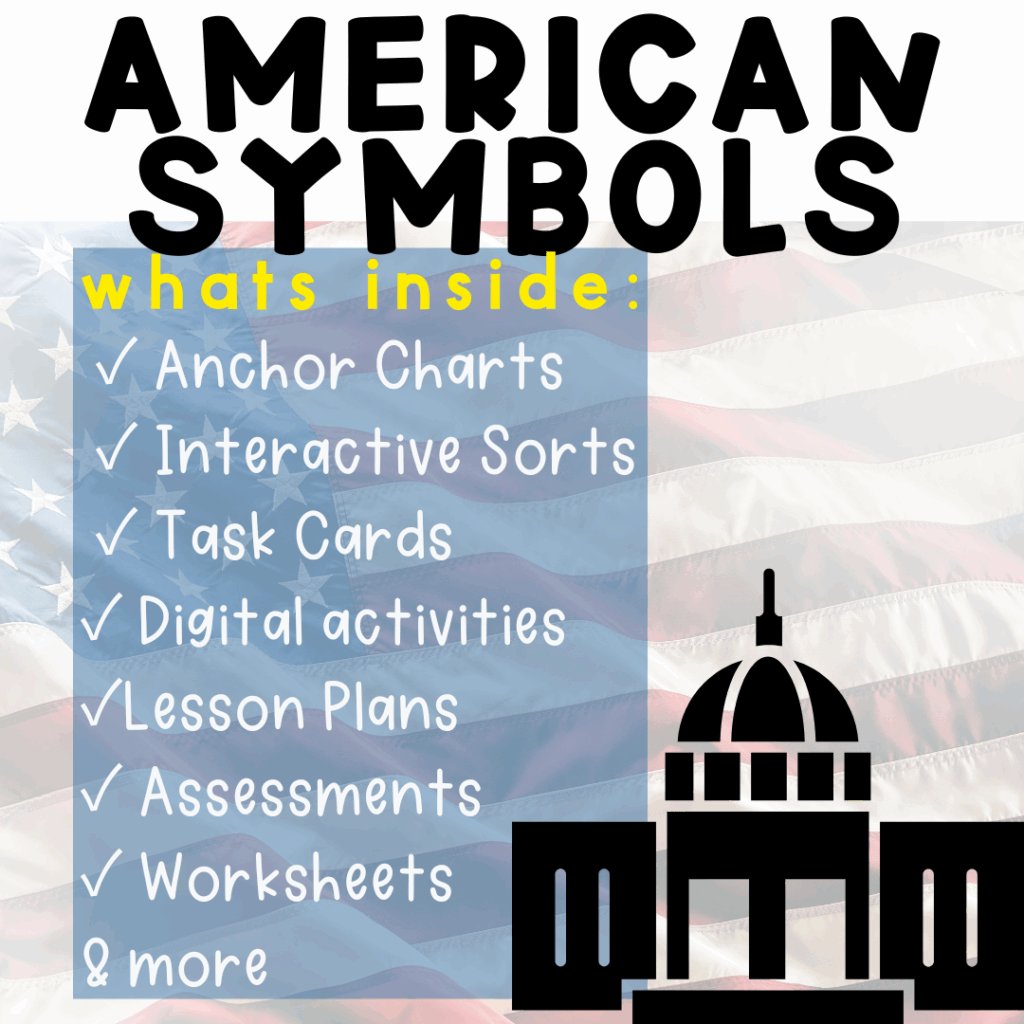
🛒 Grab the full American Symbols unit here
Ask Yourself: How Do You Make History Come Alive in Your Classroom? Do your students recognize the flag? Do they light up when learning about real-world connections? Teaching symbols is a great way to open that door.
Final Thoughts: Teaching American Symbols in a Special Education Classroom Can Be Easy and Engaging This doesn’t have to be a complicated or abstract unit. With the right supports—visuals, repetition, real-life examples—you can make history relevant and exciting.
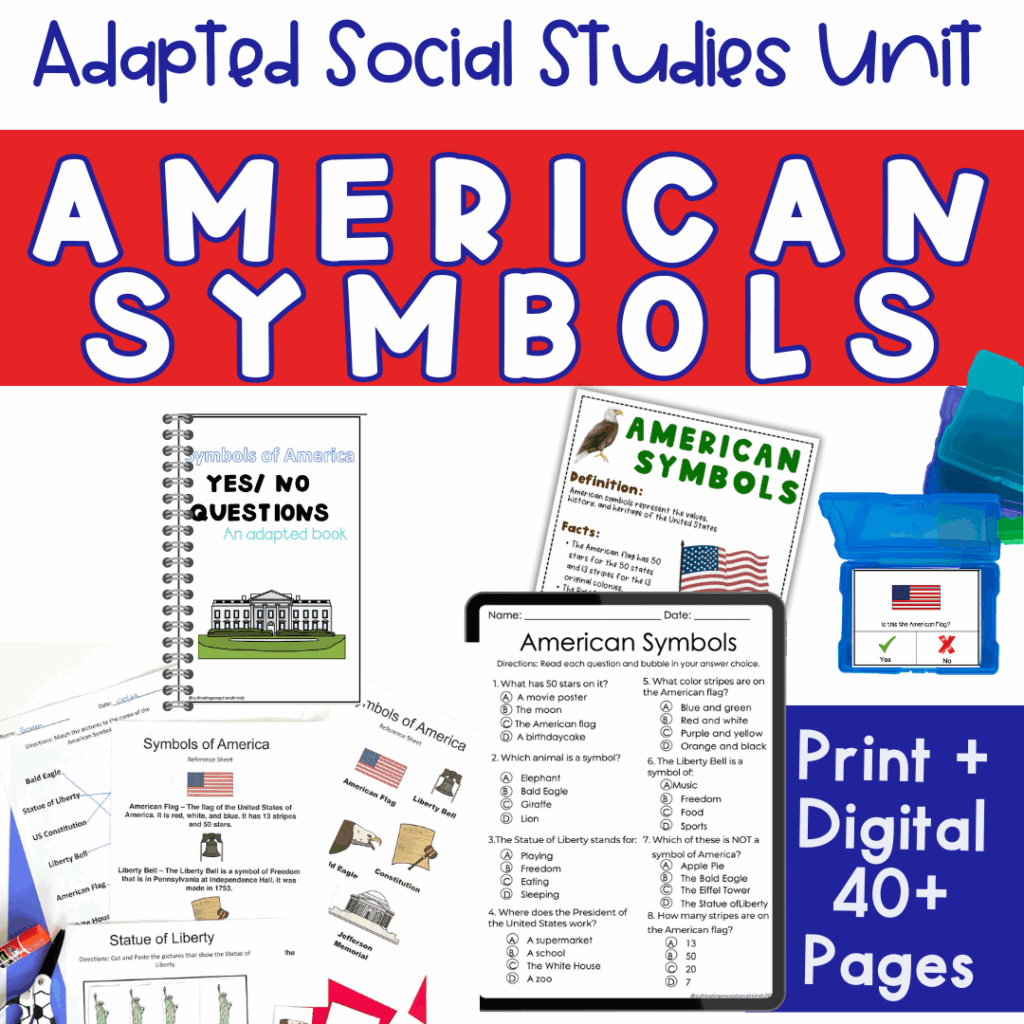
📦 Get the full American Symbols unit
📚 Grab the Complete Social Studies Bundle
✨ Join The Exceptional Collective for monthly themed content, coaching, and templates.
📚 Find more ideas for science and social studies