





Science Made Simple: How to Use Adapted science units for self‑contained special ed Classroom
Teaching Science Can Be FUN (Yes, Even in Special Ed!)
Have you ever looked at a science standard and thought, “How in the world am I supposed to teach this to my students?” You’re not alone. But here’s the good news: science doesn’t have to be hard—or boring. In fact, with the right tools, it can be one of the most engaging parts of your day.
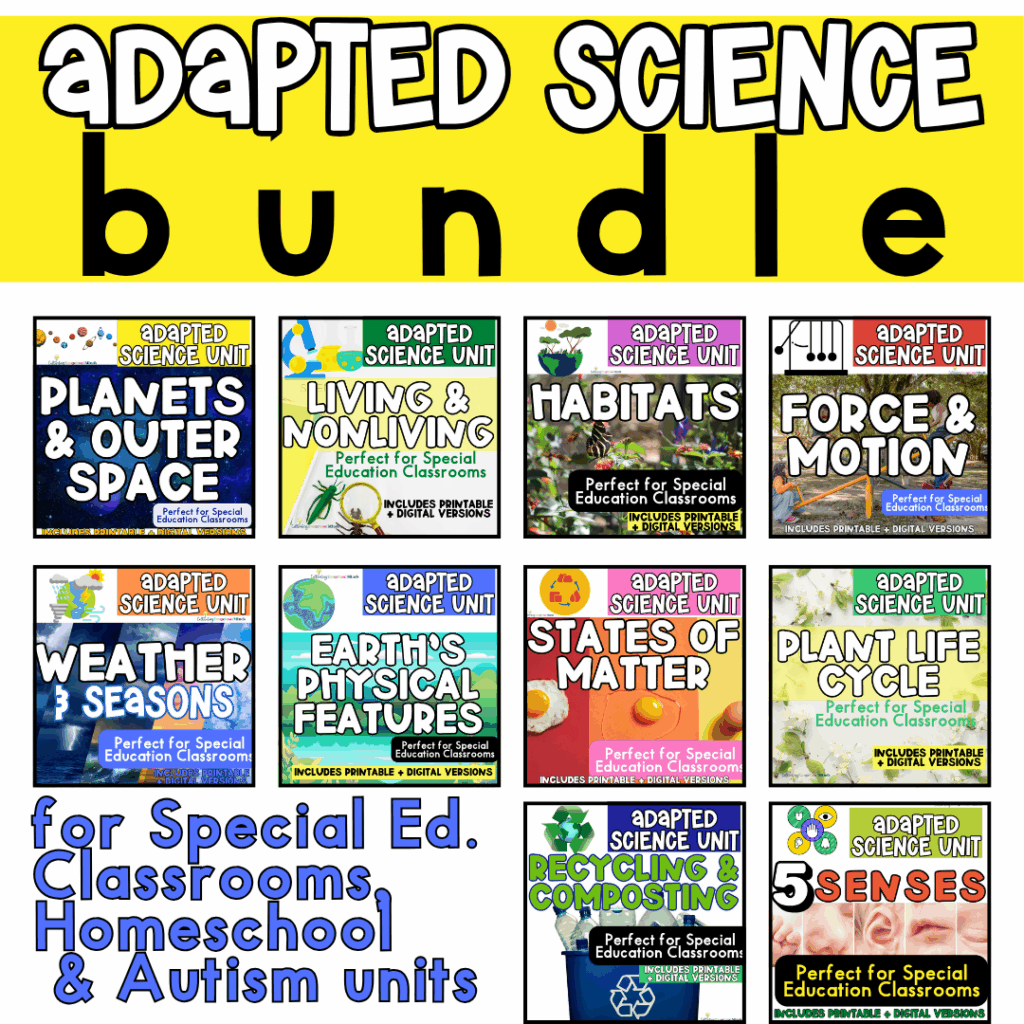
I’ve worked with students who are non-verbal, who have complex communication needs, and who use AAC. And still—we talk about the planets. We explore force and motion. We learn about weather. Why? Because adapted science units make these big topics feel bite-sized and doable.
What Are Adapted Science Units?
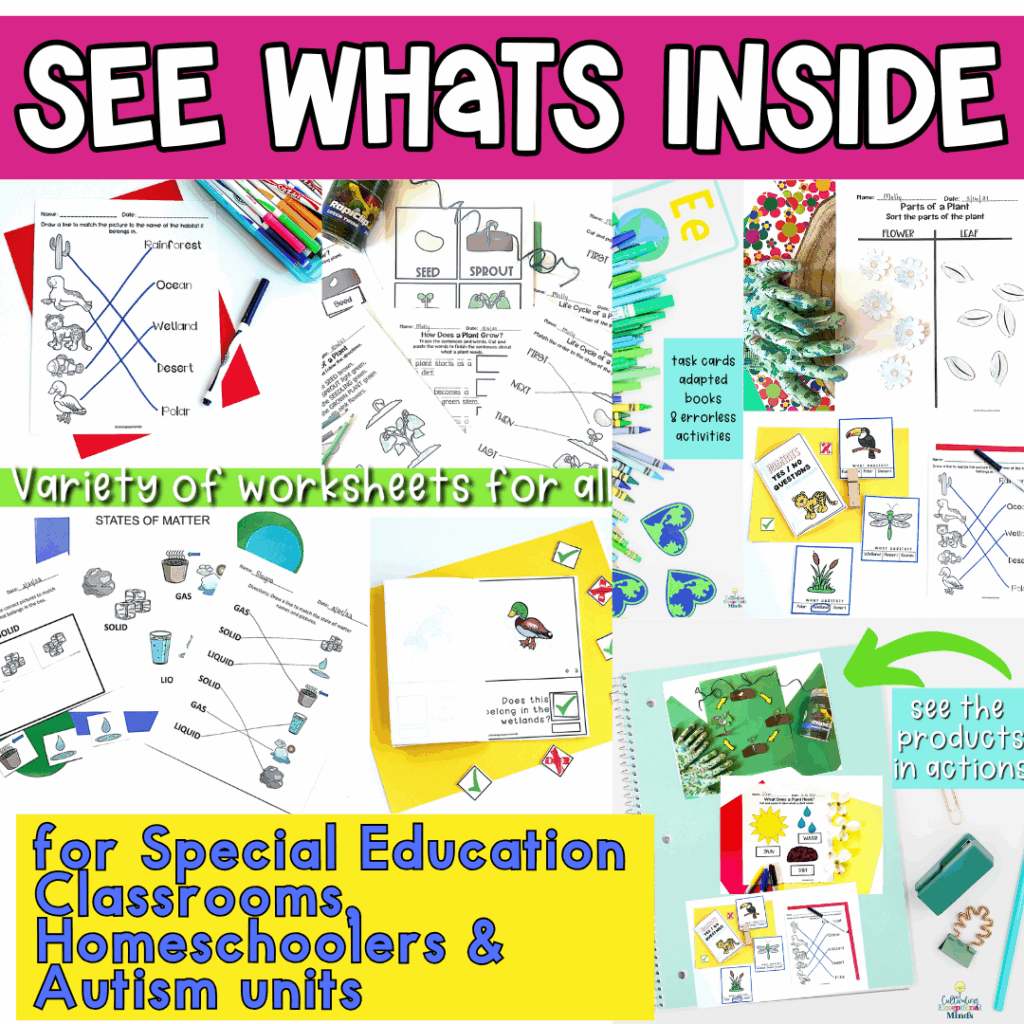
Adapted science units are modified teaching materials designed specifically for students in special education. They include simple language, visual supports, hands-on materials, and built-in repetition. These units help our students access grade-level content in a way that fits their learning needs.
The Adapted Science Bundle for Special Ed on TpT is a goldmine. It includes lessons on topics like weather, planets, force and motion, recycling, and more. You get:
- Pre/post assessments
- Adapted books
- Worksheets
- Task cards
- File folders
- Google Slides
- Visuals for students
The Why: Why Science in a Self-Contained Special Ed Classroom Matters
Science is everywhere even science units for self‑contained special ed. It’s in the rain that falls on the roof. It’s in the magnet holding student art on the board. When we teach science, we teach curiosity, problem solving, and real-world thinking.
Here’s what science instruction does for our students:
- Builds background knowledge
- Encourages exploration and play
- Supports communication through labeling and explaining
- Gives a reason to model core words like “go,” “stop,” “more,” and “help”
One Quick Story From My Classroom
I once taught a lesson on Force and Motion using toy cars and a cardboard ramp. One student, who used an AAC device to speak, kept saying “Go! Go! Go!” as we tested which car would go fastest. Another student measured with a ruler and told us, “This one went FAR.”
They weren’t just playing. They were learning vocabulary, practicing motor skills, using core words, and making predictions. And yes, they were having fun.
The How: Tips to Use Adapted Science Units in Your Classroom
- Start with the visuals. Anchor charts and adapted books help build context.
- Model everything. Don’t be afraid to get silly! Act it out, touch it, try it.
- Repeat often. Repetition builds retention.
- Use multiple formats. Try a digital slide one day and a cut-and-paste task the next.
- Involve paraprofessionals. Use the same visuals and language so everyone’s consistent.
Here’s a Sample Week Using the ‘Weather and Seasons’ Unit:
- Monday: Read the adapted book together. Use visuals to identify rain, snow, sun.
- Tuesday: Do a cut-and-paste worksheet to match weather to clothing.
- Wednesday: Watch a simple weather video and act out different weather types.
- Thursday: Complete a task card activity in small groups.
- Friday: Use the pre/post assessment to check understanding.
FAQ: What If My Students Are at All Different Levels?
That’s the beauty of adapted science units. Every component can be used at different levels. One student may be pointing to a sun picture while another is reading the adapted text aloud. That’s okay. That’s inclusion in action.
The Where: Where Can I Get These Science Units?
You can grab the full Adapted Science Units for Special Education on TpT right here:
Want more support teaching science (and everything else) in a special education classroom?
📥 Check out this post on teaching science and social studies
Let’s Talk—How Do YOU Teach Science in Special Ed?
What’s your favorite science topic to teach in your classroom? Drop it in the comments below or shoot me a DM on Instagram @cultivatingexceptionalminds. I’d love to hear from you!
Still Need a Little Help? We’ve Got You.
If you need coaching, resources, or ideas for how to simplify your planning, The Exceptional Collective is where the magic happens.
Inside, you get:
- Monthly themed content (including science!)
- Trainings and templates
- Coaching and support from someone who gets it
✨ Join The Collective and take one more thing off your plate.
If you’re ready to make teaching science exciting again—even in a self-contained setting—grab the Adapted Science Bundle for Special Ed and let Cultivating Exceptional Minds help you every step of the way.