






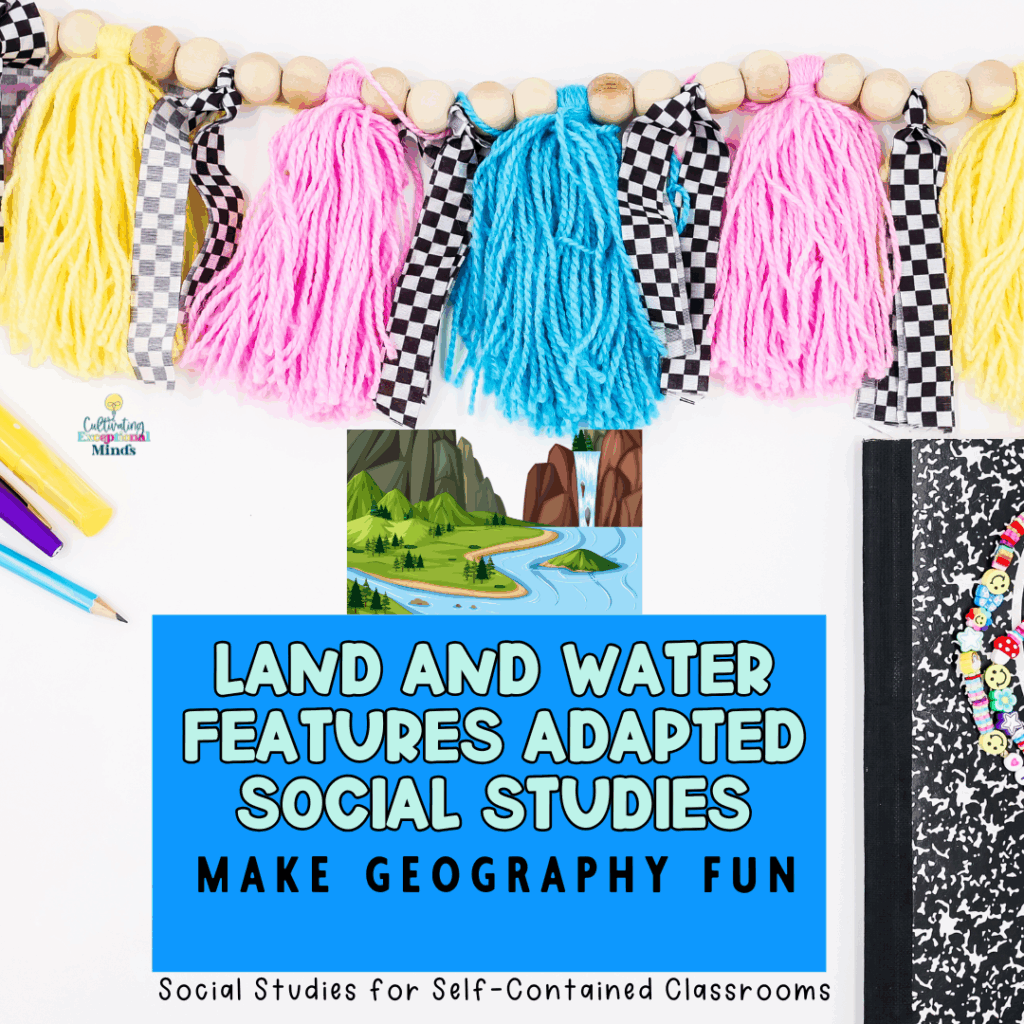
From Mountains to Lakes—Bring the Outdoors into the Classroom
“Mountains are tall,” my student shouted while stacking foam blocks. Another pointed at the sensory bin, saying “Water!” while scooping blue gel beads. This wasn’t just play—it was learning about land and water features in a way that stuck.
Teaching geography in special ed doesn’t have to mean boring worksheets. When you add hands-on materials, adapted visuals, and repetition, your students begin to recognize the world around them—even if they’ve never left their hometown.
Why Teach Land and Water Features in a Self-Contained Class?
- Builds real-world vocabulary and environmental awareness
- Supports descriptive language (tall mountain, deep lake)
- Reinforces visual discrimination
- Encourages sensory exploration through textures, materials, and movement
- Connects to science and reading lessons
What If My Students Struggle With Abstract Concepts?
That’s common. The trick is to make it real—use visuals, real objects (like sand or water), and repeated exposure. Start with two types (like land vs. water), then build from there.
5 Engaging Ways to Teach Land and Water Features in Special Education
- Sensory bins – Use dirt for land, water beads for water.
- Matching file folders – Match landform pictures to labels.
- Anchor charts – Display real photos with labels.
- Interactive books – Read and point to visuals as a class.
- Sorting games – Separate land vs. water images in small groups.
Story Time: When “Island” Meant Something More
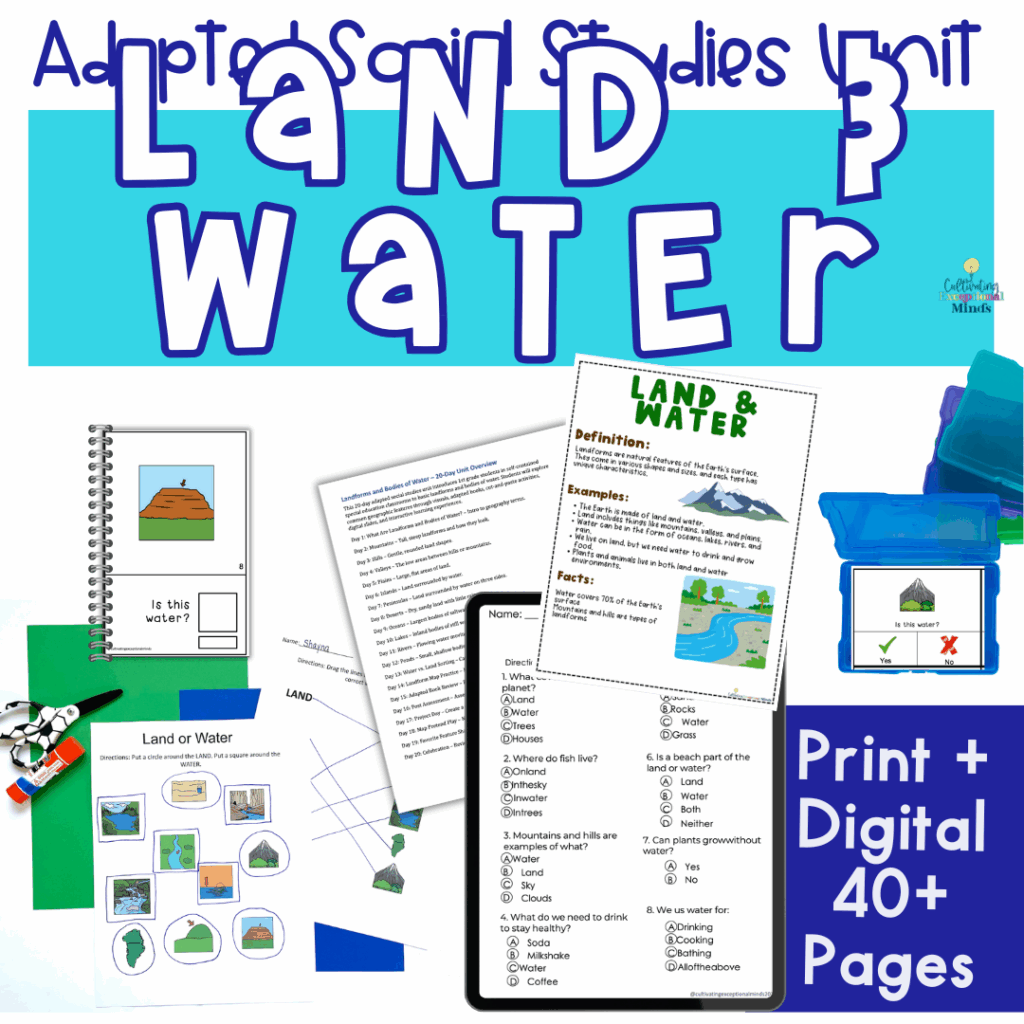
One of my students used to call everything “land.” One day, after weeks of working through the adapted book and sorting tasks, he pointed to a picture and said, “Island is land with water around!” That moment showed how repetition, visuals, and adapted resources can click.
Try the Freebie First Before jumping into the full lesson, try the Land and Water Freebie! It includes sorting visuals and simple comprehension pages. Download it here.
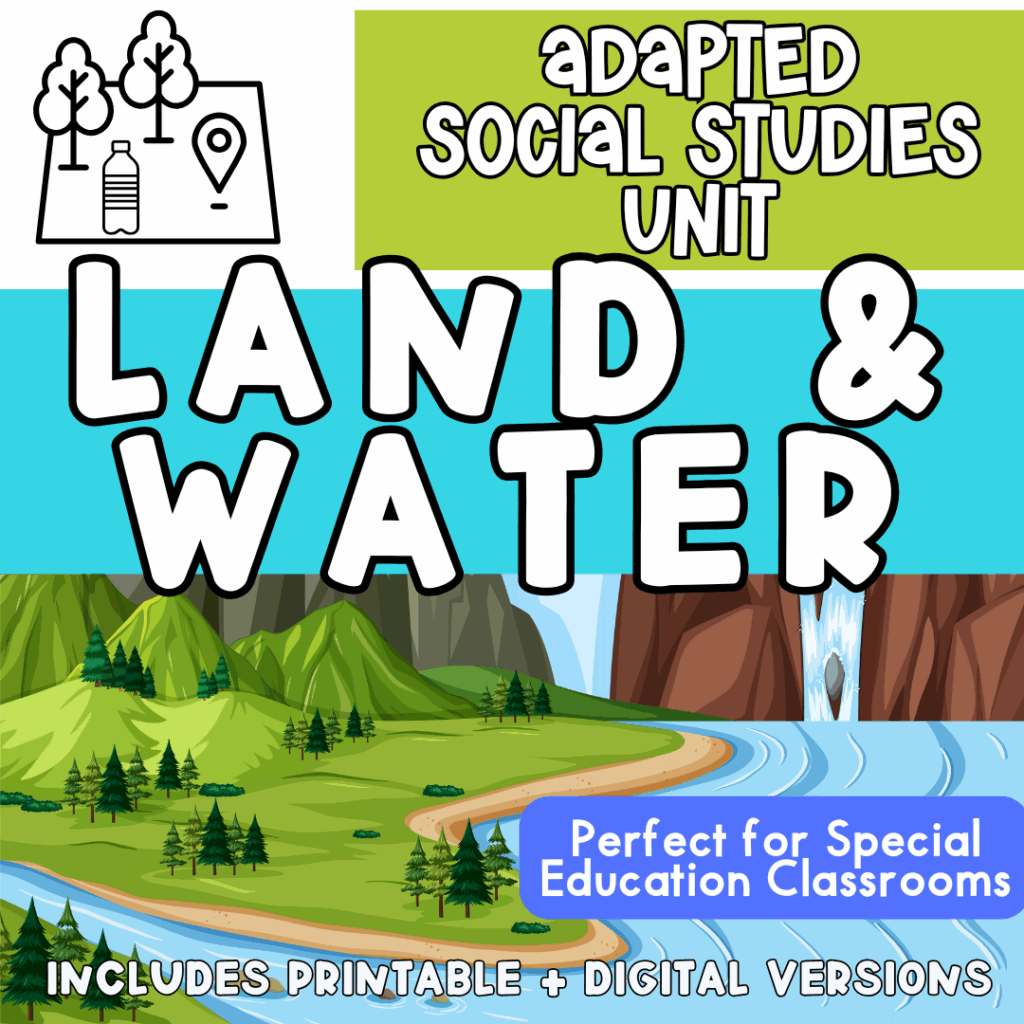
Explore the Land Water Features Adapted Social Studies Unit
What’s Inside
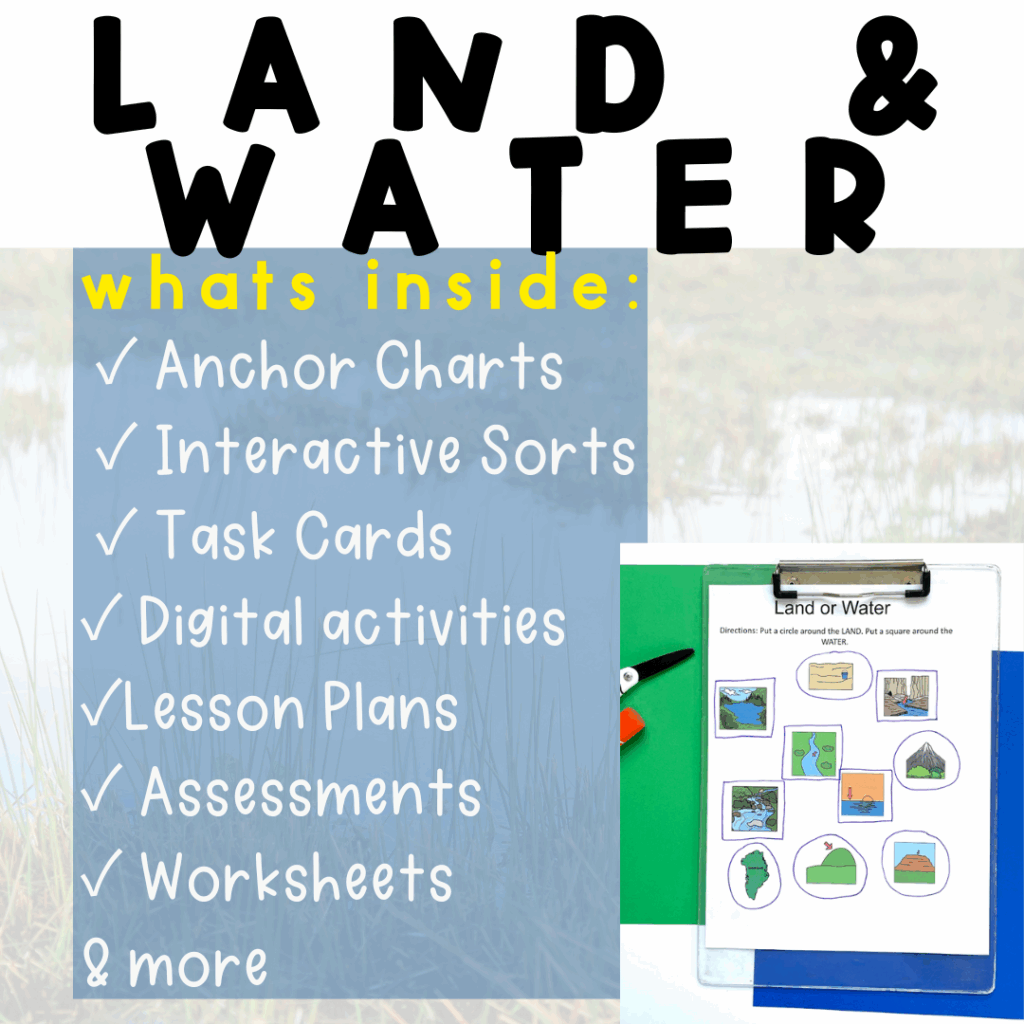
Adapted book with real photos and visuals
- File folders for matching landforms and bodies of water
- Sorting cut-and-paste activities
- Anchor charts and comprehension pages
- Digital Google Slides version
🛒 Grab the full Land & Water Unit here
Let’s Plan Your Week
Monday: Read the adapted book and introduce land vs. water. Tuesday: Build models with clay or foam shapes. Wednesday: Match landforms to their names using file folders. Thursday: Sort real vs. pretend landforms in small groups. Friday: Watch a short video about different features, then label them.
Ask Yourself: How Do Your Students Connect With the World Around Them? Do they notice hills when you walk outside? Do they recognize rivers in books or videos? Teaching land and water features can open their eyes to the bigger world—even if they aren’t verbal yet.
Join the Movement: Teaching Geography in Special Ed Just Got Easier Want to simplify how you teach land and water features adapted social studies in your classroom?
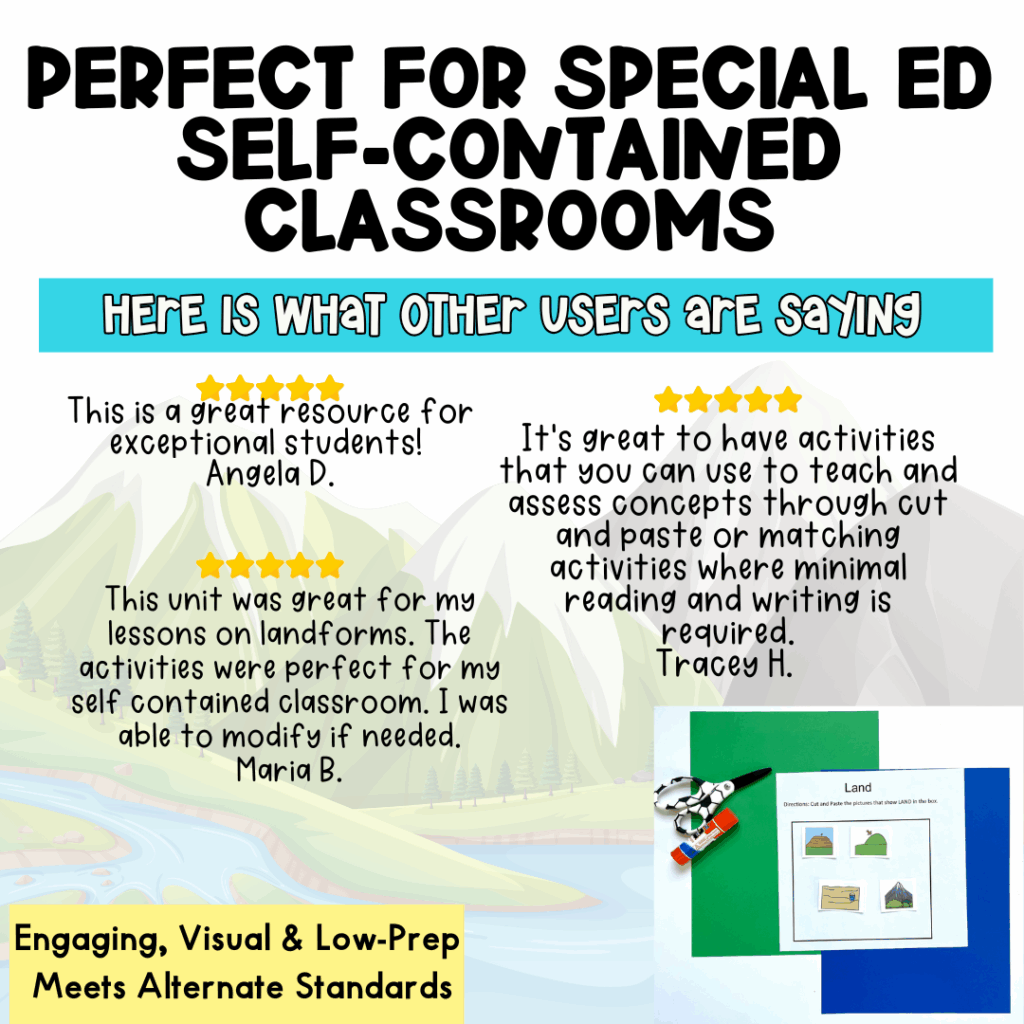
📦 Get the full Land & Water Unit
📚 Grab the Complete Social Studies Bundle
✨ Join The Exceptional Collective for monthly themed content, coaching, and classroom-ready tools.
📚 Find more science + social studies ideas on the blog