




Little Jobs, Big Impact—Meet the Heroes in Your Community
“Who drives the fire truck?” I asked. Instantly, my student with limited verbal language used his AAC device to say “firefighter.” Another pointed to our community helper posters. We all clapped.
There’s something magical about teaching community helpers. It gives our students language, confidence, and a sense of place in the world. With the right lesson structure and supports, even the most complex learners can connect with these everyday heroes.
Why Community Helpers Lessons Matter in Special Education
In a self-contained classroom, teaching about jobs isn’t just about career exploration—it’s about identity, social skills, and understanding how our world works.
Here’s why these lessons matter:
- Helps students recognize important roles around them
- Builds safety vocabulary (police officer, nurse, mail carrier)
- Encourages expressive and receptive communication
- Provides real-life context for dramatic play and reading
- Supports community-based instruction
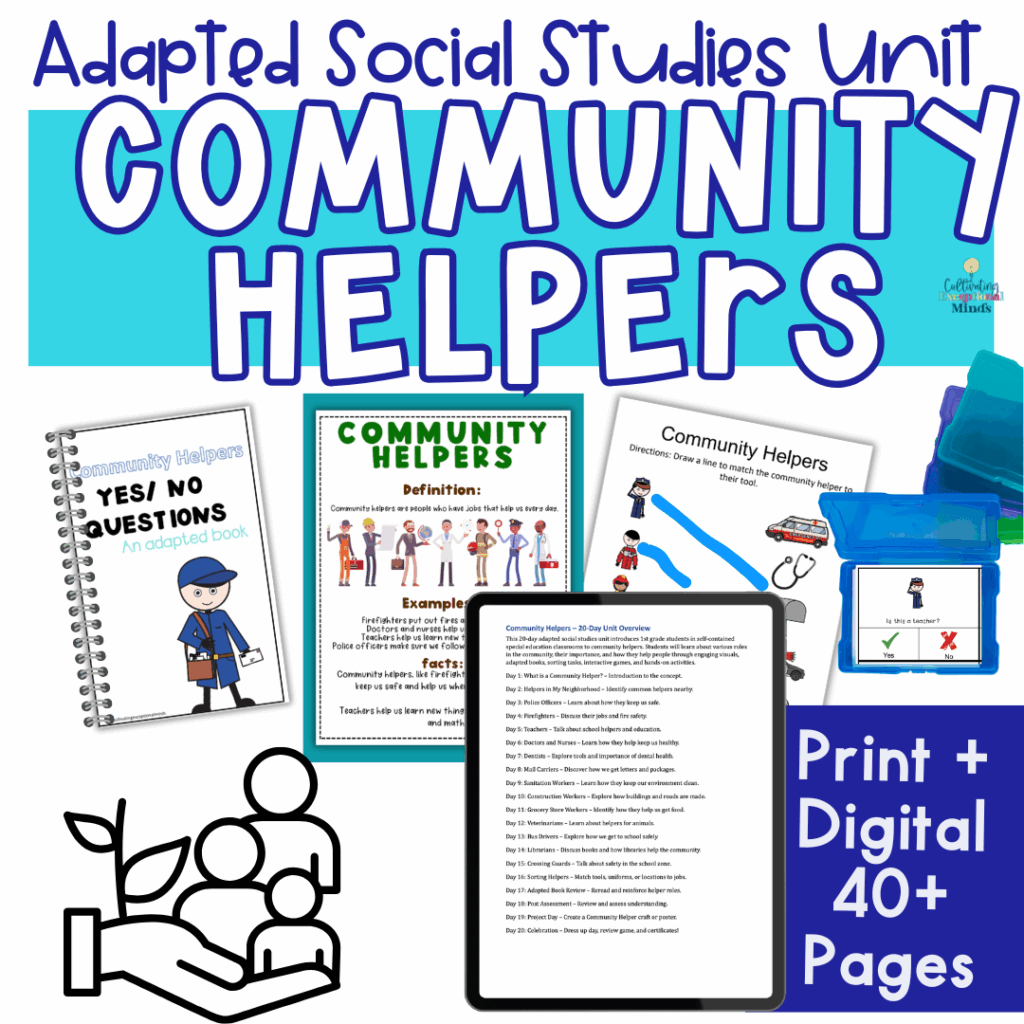
What’s in the Community Helpers Interactive Lesson for Special Education?
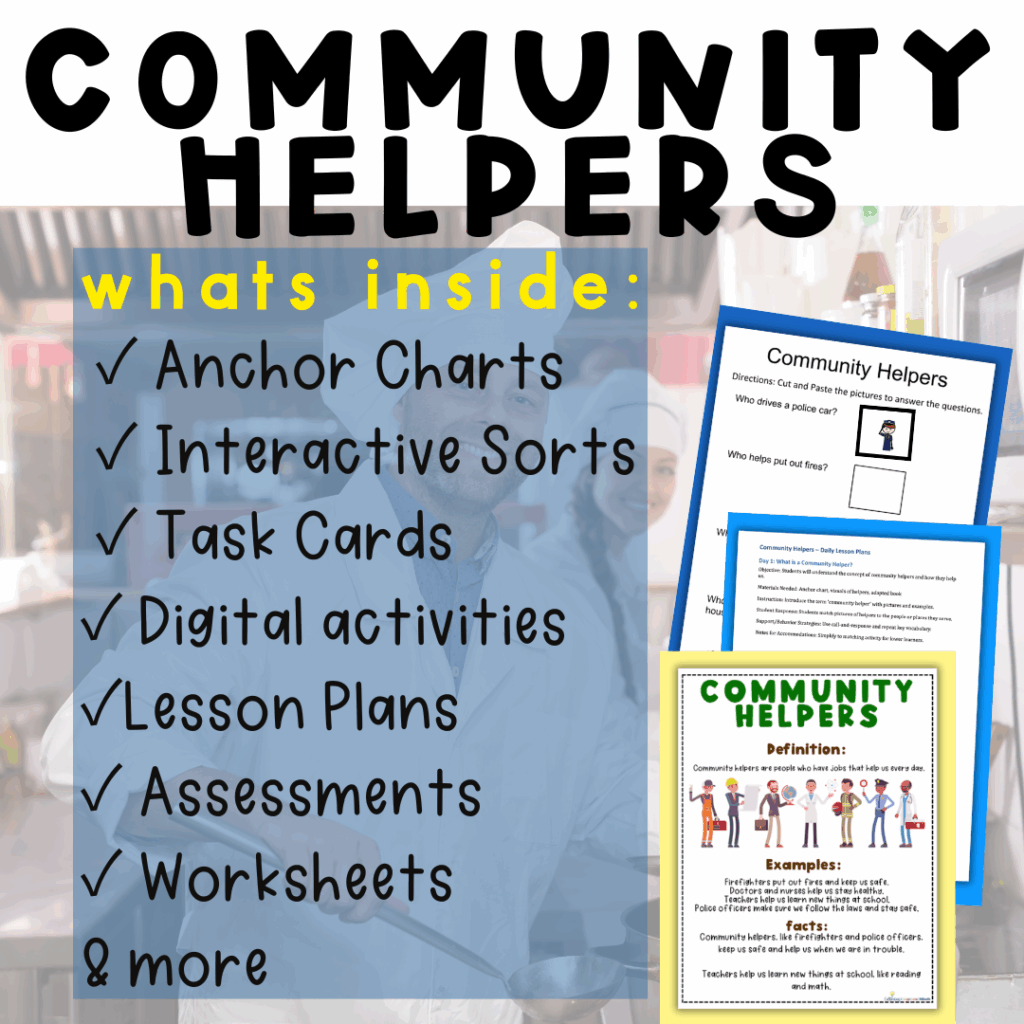
This TpT unit is loaded with activities that are visual, simple, and totally functional:
- Adapted book with interactive visuals and simple sentences
- File folders and task cards for matching and labeling
- Role play masks and pretend play scripts
- Sorting worksheets and anchor charts
- Digital version for Google Slides
🛒 Grab the Community Helpers Unit Here
One Week of Community Helper Activities in a Self-Contained Class
Monday: Read the adapted book. Match tools to helpers. Tuesday: Dress-up play. Use masks and props to act out jobs. Wednesday: File folder work matching helpers to vehicles or tools. Thursday: Cut and paste helpers in their settings (hospital, firehouse, etc.). Friday: Sort who helps where—school, home, or town? Then celebrate with a community helper song or video.
What If My Students Don’t Understand Job Roles Yet?
Start small. Use real-life connections. “Miss Dawn is a teacher.” “The nurse gave you a Band-Aid.” Reinforce with photos, books, and videos.
Even if students can’t express who each helper is yet, they can learn through repetition, visuals, and play.
Story Time: A Nurse, a Mail Carrier, and a Big Smile
During our unit, one student insisted on wearing the nurse mask every day. When the real school nurse visited, he ran up and said “You! Nurse!” That moment of connection made the weeks of practice worth it.
Freebie Alert: Start with This! 🧠 Social Studies Freebie – Try a few activities from the larger unit for free. Download the community helpers freebie here.
📚 Want more adapted social studies ideas? Explore the blog for science + social studies.
Who’s the Favorite Helper in Your Room?
Is it the firefighter? The chef? The veterinarian? Share your students’ favorite community helpers and tag @cultivatingexceptionalminds—we love to see them in action!
Where to Find More Community Helpers Interactive Lessons for Special Education
📦 Shop the Community Helpers Unit
📚 Get the Full Social Studies Bundle
✨ Join The Exceptional Collective for monthly themed content, trainings, and coaching support.
Bring the Helpers Into Your Classroom
Teaching community helpers in a special education setting doesn’t have to be complicated. With the Community Helpers Interactive Lesson for Special Education, you’ll have everything you need to build vocabulary, inspire confidence, and show your students how their community works.
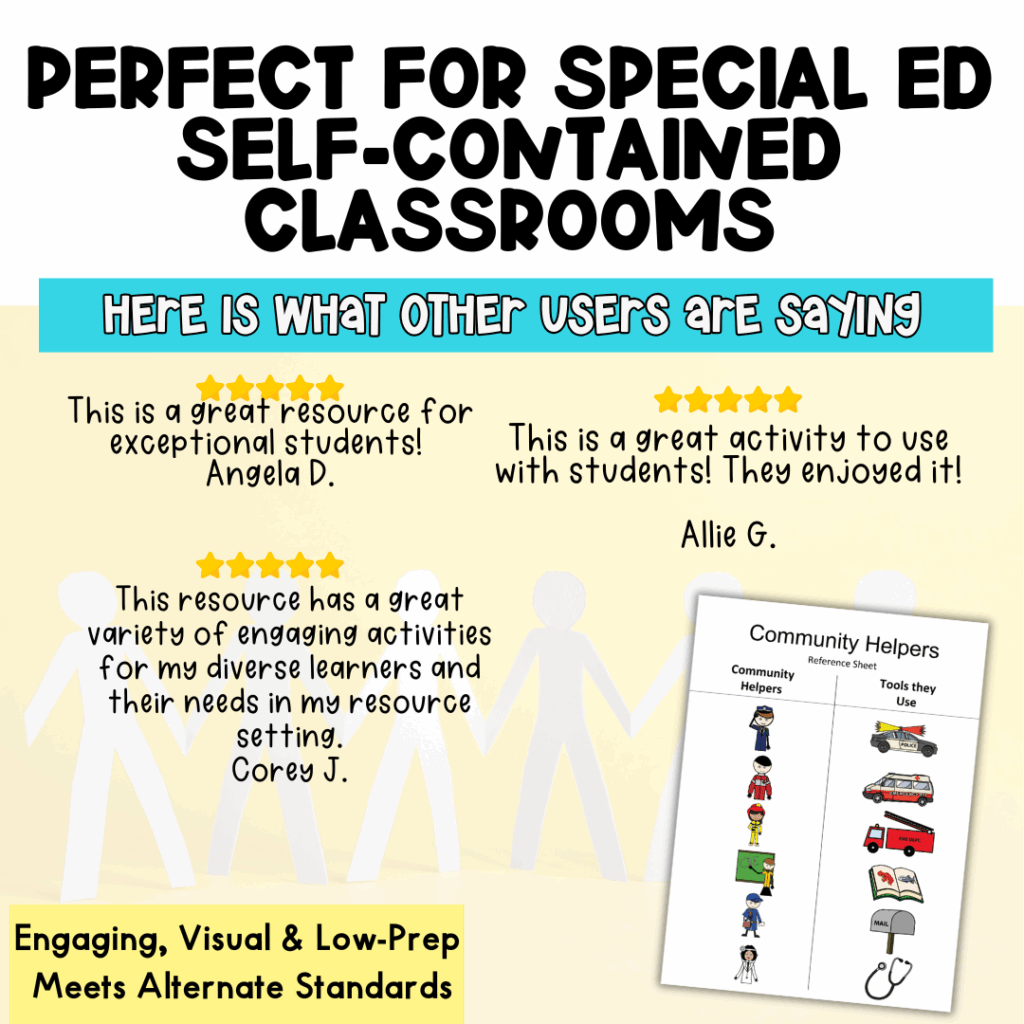
Download the freebie, grab the unit, and check out The Collective for even more support all year.