





In this blog post, you’ll learn how to use adapted recycling lessons to teach environmental science in a self-contained special education classroom. We’ll cover what makes these units effective, how to use them step-by-step, where to grab powerful resources, and how to snag four classroom-ready freebies. Plus, you’ll get a real story from the classroom and practical ways to make learning stick.
Science and Recycling Can Be Simple and Fun!
Let’s be real—teaching recycling to special education students can sound overwhelming. What’s trash? What’s reusable? And how do you explain all that in a way your learners can actually understand?
I’m here to tell you it’s not only possible—it can be fun, hands-on, and meaningful. When I first introduced my class to our recycling unit, I didn’t expect the excitement that would follow. Students were pointing out plastic and paper in our classroom bins, practicing new vocabulary, and even reminding our custodian what goes where.
All of this happened because of one tool: an adapted recycling lesson designed just for special education students.
Why Recycling Lessons Matter in Special Education
Recycling isn’t just a science standard. It’s a life skill. Teaching students to identify, sort, and understand different materials builds independence, promotes responsibility, and increases environmental awareness.
In a self-contained classroom, these lessons give structure and predictability. Plus, they open up chances for communication and functional routines that stick.
A Real Classroom Story
I’ll never forget when we did a sorting activity from the adapted recycling unit. One of my students who rarely participated grabbed a plastic bottle from our classroom bin, matched it to the blue “recycle” symbol, and looked at me with the biggest grin.
That simple moment was huge. It wasn’t just about science—it was about connection, confidence, and learning that made sense to them.
What’s Inside the Adapted Recycling Lesson
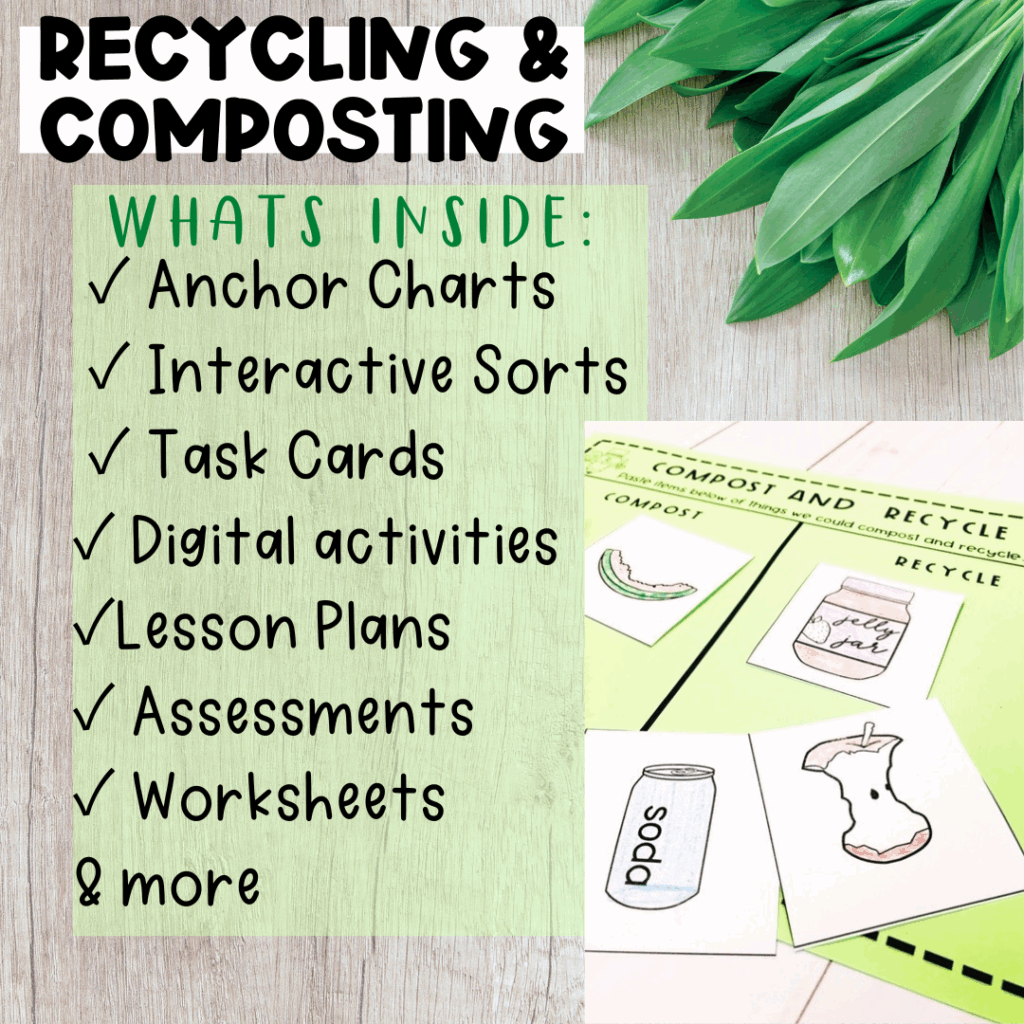
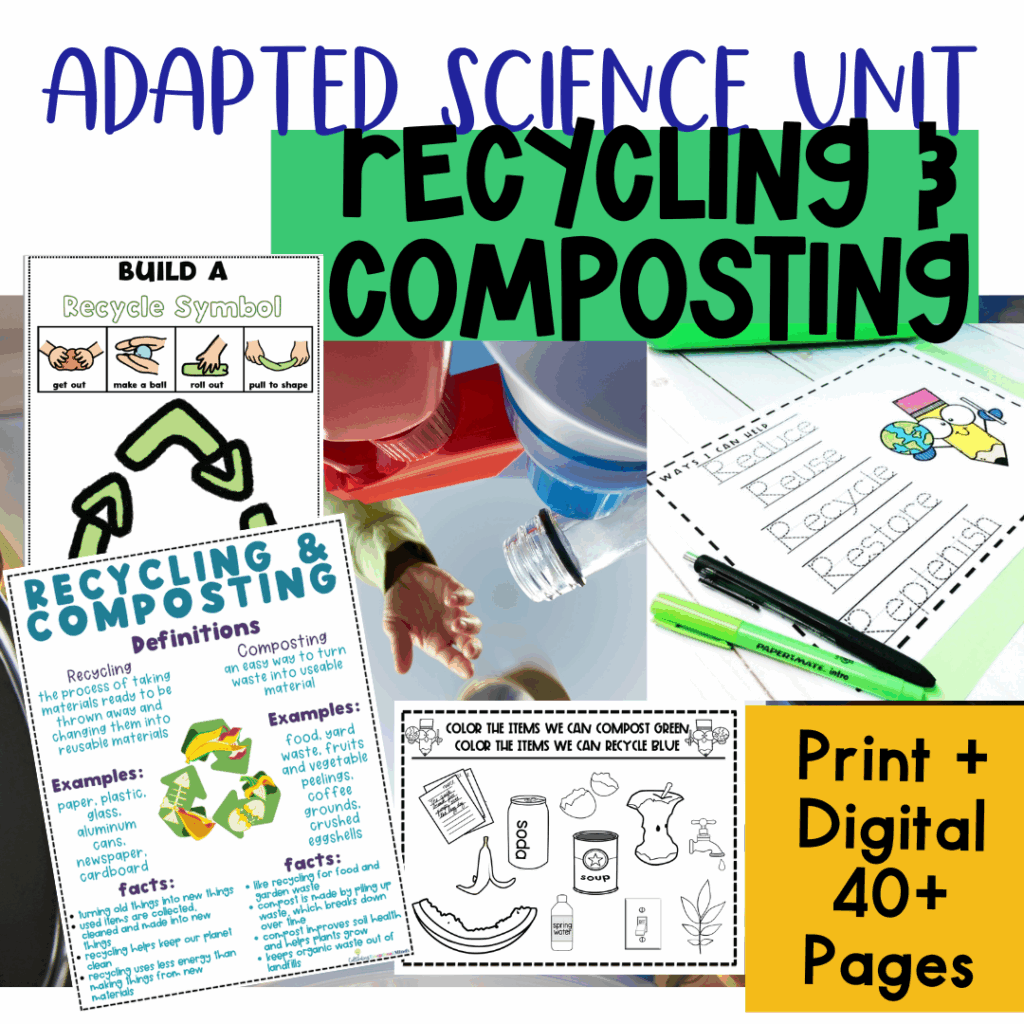
If you’re looking for something ready-to-go, the Recycling & Conserving unit from my Adapted Science Bundle includes everything you need:
- Sorting cards with real images
- Worksheets with clear visuals
- Adapted books explaining what, why, and how we recycle
- Interactive Google Slides
- Task cards and file folder games
- A pre/post assessment to check understanding
🛒 Grab the recycling unit here or get the full bundle
Don’t Miss These Freebies! Want to get started right away with free, high-impact support tools?
🎁 Download the Science Poster Freebie to introduce core science vocabulary and spark student interest. Grab it here.
🌱 Explore the Life Cycle of a Plant Freebie, a full adapted science mini-unit. It’s perfect for visual learners and includes activities you can print today. Download here.
🧠 Snag the Science Freebie Starter Kit to support science learning in your self-contained classroom. Get it here.
☕ Try out our Coffee Cart Freebie, perfect for building functional academics and community skills. It’s a classroom favorite. Download it here.
How to Teach an Adapted Recycling Lesson in Special Education
Let’s walk through a sample plan:
Monday: Read the adapted book on recycling. Use AAC or visuals to model core words like “trash,” “recycle,” “paper,” and “plastic.”
Tuesday: Use picture cards to sort items into trash or recycle bins. Make it interactive—use real items if you can!
Wednesday: Complete a worksheet where students match objects to the correct bin.
Thursday: Try a hands-on task card or file folder game. Reinforce sorting.
Friday: Watch a short video on recycling and take the assessment as a group.
Support Tips:
- Use color-coded visuals.
- Model sorting steps.
- Repeat vocabulary daily.
- Pair visuals with core boards or switches.
- Encourage staff to use the same language and prompts.
What If My Students Don’t Understand the Concept Right Away?
That’s totally okay. Many students need to see, touch, and hear something over and over before it clicks. Use real objects. Show simple videos. Break it down into two choices. And remember—celebrate every small win!
What’s One Way You Already Teach About Recycling?
Is there a moment in your day when you talk about trash or cleaning up? That’s your starting point! Drop your ideas or questions in the comments—I’d love to hear how recycling fits into your classroom.
Where to Get the Best Adapted Recycling Resources
If you want something that’s ready to print and go, this adapted unit is for you. You can get just the Recycling and Conserving unit or grab the full Adapted Science Units Bundle to cover the whole year.
🛍️ Click here to view the bundle
📚 Need more ideas? Check out this post: How to Teach Science and Social Studies in Special Ed
Let Us Help You Simplify Science
Need support teaching science or anything else in your special education classroom?
Cultivating Exceptional Minds has your back. Whether you’re looking for a one-time resource or full-year support, we’ve got tools that work. Join The Exceptional Collective for monthly themed content, trainings, templates, and a community that gets it.
✨ Join The Collective here and make lesson planning one less thing to worry about.
Ready to Teach Recycling with Confidence? Grab the Adapted Recycling Lesson for Special Education Students, check out our science freebies, or get the full Science Bundle to bring simple, powerful science lessons into your classroom.