





This post explores how to teach the solar system using an adapted outer space lesson for special needs learners. It includes real classroom tips, a weeklong plan, free tools, and a TpT resource to bring planets and stars to life for every student.
Blast Off with Adapted Space Lessons
What do stars, planets, and rocket ships have in common? They’re all part of one of the most exciting science topics to teach—space!
When we taught the solar system in my classroom, we turned off the lights and used flashlights as “stars.” Each student had a planet to hold. We took a “trip” through space while learning facts about each one. My students lit up—literally and figuratively. Some said “moon,” others used a switch to say “go!” One even pretended to float around the classroom.
That’s the power of an adapted outer space lesson for special needs learners: hands-on, visual, and memorable.
Why Teach Outer Space in Special Ed?
Space can feel abstract, but with the right supports, it becomes one of the most engaging science units of the year. Teaching the solar system builds:
- Vocabulary: planet, moon, sun, star, orbit
- Cause and effect: light/dark, day/night
- Listening comprehension through facts and repetition
- AAC language use with core words like “go,” “stop,” “big,” “round”
- Student engagement through role play and imagination
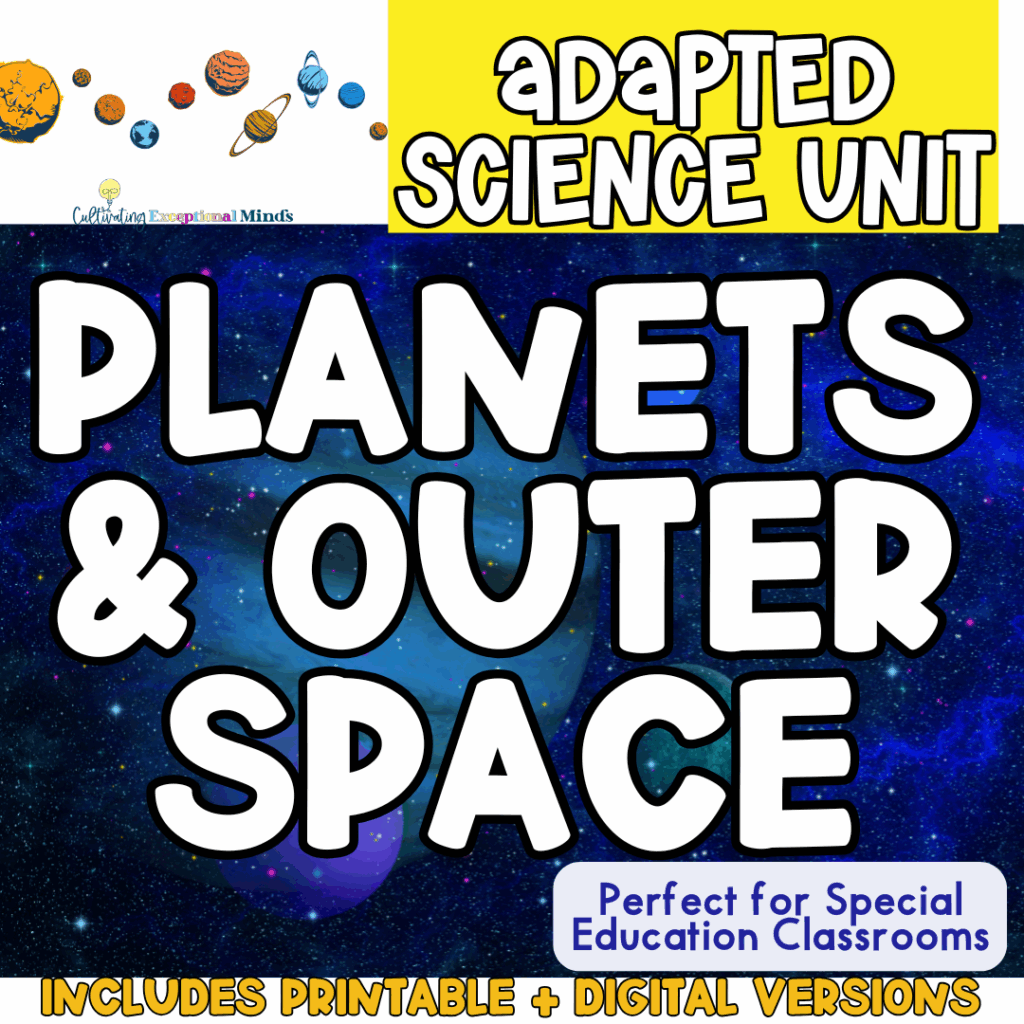
What’s Inside the Solar System Adapted Science Unit?
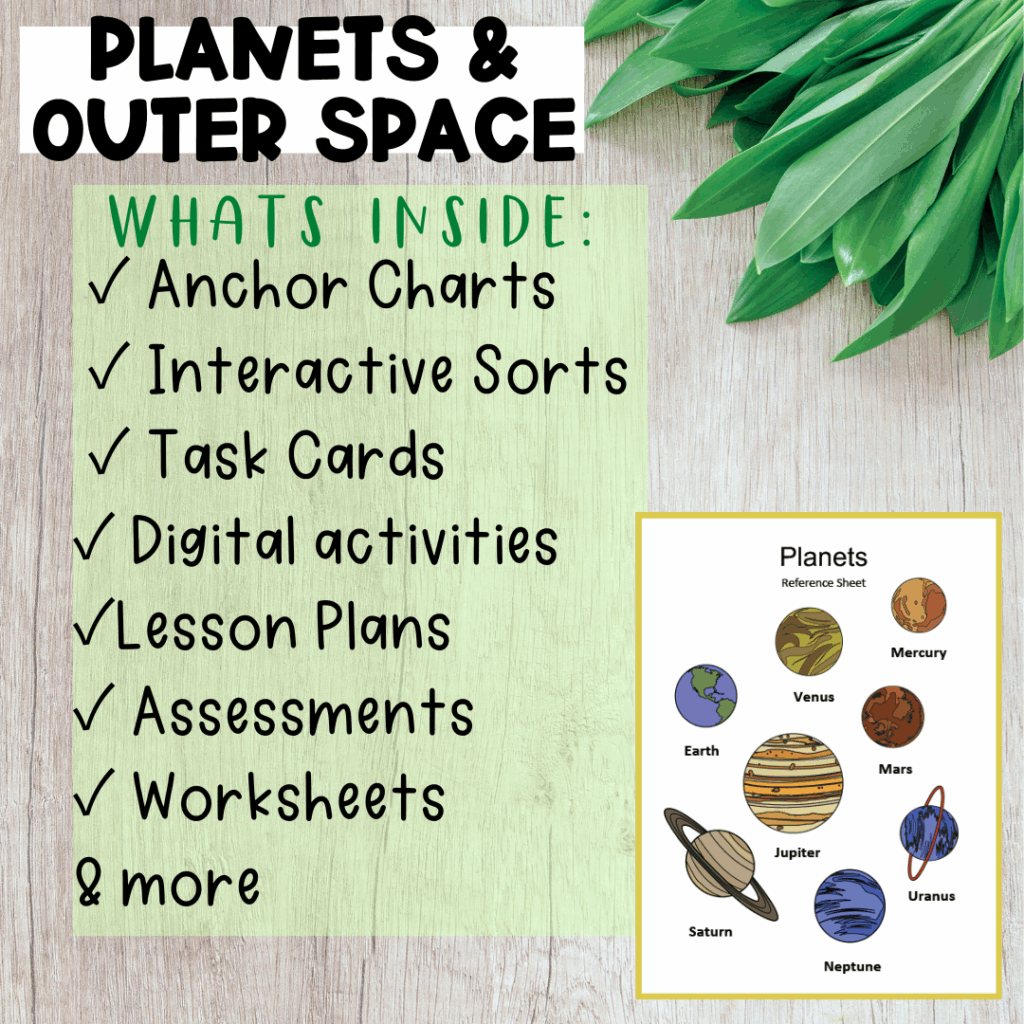
This resource is packed with ready-to-use materials designed for special education:
- Adapted book introducing the planets
- Anchor charts and visual supports
- Matching and sorting worksheets
- Google Slides version for digital learning
- File folder games and task cards
- Pre/post assessment to measure growth
🛒 Grab the Outer Space Unit Here
A Sample Week: Outer Space Adapted Science in Action
Monday: Introduce the adapted book and planet visuals. Tuesday: Use flashlights and balls to model orbits. Wednesday: Match planet names to pictures in a cut-and-paste worksheet. Thursday: Small group file folder activity on planet size/order. Friday: Watch a short video and complete the assessment.
Bonus Ideas:
- Set up a classroom “rocket launch” zone
- Play space-themed music during centers
- Use visuals for day/night and orbiting
One Real Classroom Moment
I handed out planet visuals and one student, who was mostly non-verbal, kept pointing to Saturn and saying “round!” Another used her device to ask, “Where moon?” It turned into a full conversation about moons, and we even made one out of foil. That moment showed me the magic of engagement when science meets creativity.
Don’t Forget Your Freebies!
🧠 Science Freebie Starter Kit – Great visuals and tools for your space unit. Download it here.
🌱 Life Cycle of a Plant Freebie – A great seasonal science crossover to continue building science vocabulary. Get it here.
What If My Students Don’t Grasp the Concept Right Away?
Repeat it! Use real objects and visuals. Break things down to “sun” and “moon” first. Use music, movement, and pretend play to make it stick. You don’t need to cover all eight planets in one week. Give them time to explore.
What’s Your Favorite Planet to Teach?
Is it Mars because it’s red? Saturn because of the rings? Or maybe you love doing space pretend play? I’d love to hear what works in your class—tag @cultivatingexceptionalminds to share!
More Science Resources for Your Classroom
📚 Need more help? Check out this post: How to Teach Science and Social Studies in Special Ed
📦 Want the whole year planned? Get the full Adapted Science Bundle. See the Bundle
✨ Need ongoing ideas and coaching? Join The Exceptional Collective for support, content, and templates built for real special educators.
Let’s Launch Learning into Orbit
Ready to explore space in your classroom? Grab the Adapted Outer Space Lesson for Special Needs, download your freebies, or join our membership for year-round science support.
Teaching space doesn’t have to be hard. With the right tools, it can be out of this world.

