






When Letters Become Their Superpower
Last year, one of my kindergarteners with limited verbal communication pointed to a velcro letter A and said “ah” during circle time. The whole team celebrated! It wasn’t just a sound—it was a step toward reading. When you teach letter recognition in special education with the right tools, those small wins add up to major progress.
What Is Letter Recognition and Why Does It Matter in Special Ed?
Letter recognition is knowing what each letter looks like and being able to name it. Sounds simple, but for students in self-contained classrooms, this is foundational and often needs a whole lot of repetition and multi-sensory input.
When we teach this skill the adapted way, we use tools like:
- Velcro task boxes for matching letters
- Large visual anchor charts
- Alphabet songs with hand motions
- Tactile letters for sensory feedback
And the good news? You don’t need to create all this from scratch.
List: What’s Inside the Special Education Letter Recognition Bundle
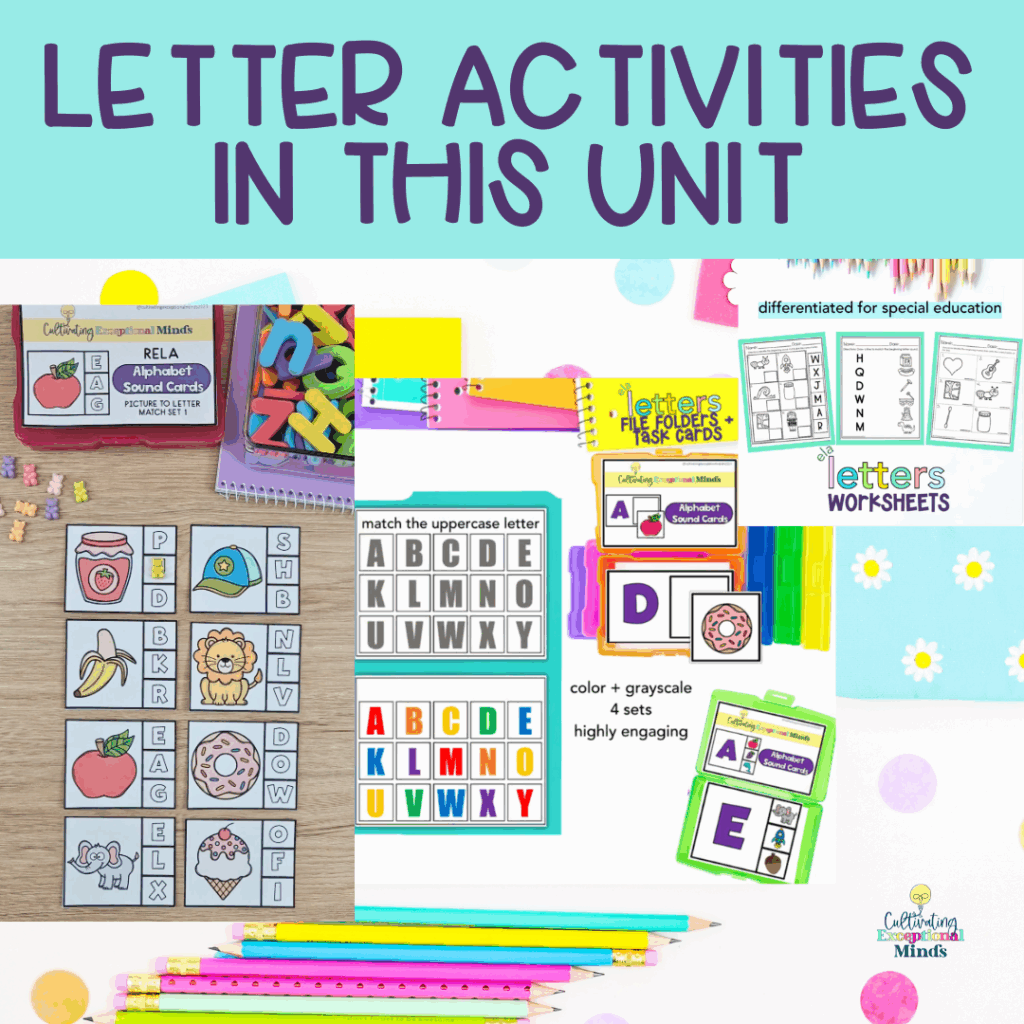
✅ 26 Adapted Letter Units (One per letter) ✅ Hands-on Task Boxes ✅ Printable Alphabet Posters ✅ Uppercase/Lowercase Matching Activities ✅ Sound Association Practice
✨ Grab the Full Alphabet Bundle Here
How to Teach Letter Recognition in Special Education
Here’s a step-by-step way to use this resource in your classroom:
- Start with Morning Circle: Introduce 1-2 letters per week using the large visual cards.
- Model with Repetition: Use the adapted slides and posters to show the letter and say the sound.
- Engage the Senses: Let students feel the letter using puffy paint outlines, sandpaper, or magnetic boards.
- Sort & Match: Give students velcro task boxes to match uppercase to lowercase.
- Check Understanding: Use cut-and-paste or pointing activities as formative checks.
FAQ: What If My Students Already Know Some Letters?
Great! Build on their strengths. You can use the bundle to target the letters they don’t know or to work on sound-symbol correspondence next.
One Teacher’s Story: The “M” Moment
One of my first-grade students was obsessed with the letter M. Every time she saw it, she lit up. So, we leaned into that interest—we made M posters, found items that start with M, and even made a snack menu of M foods. That interest drove her motivation, and before long, she was pointing out letters in her environment daily.
Where to Use These Letter Recognition Activities
✅ Morning Circle Time
✅ Literacy Centers
✅ 1:1 IEP Sessions
✅ ESY or Home Packets
✅ Independent Work Bins
Freebie Alert: Try a Sample!
Want to test out some adapted reading strategies? Download this free main idea resource to support your ELA block.
Let’s Reflect: What Letter Are Your Students Loving Right Now?
Take a moment and notice—are there certain letters that pop up in your students’ names, favorite shows, or snacks? Use that interest to build a connection.
Why You Can Teach This With Confidence
You don’t need to be a curriculum expert or have a perfect classroom. If you’re willing to offer consistency, visuals, and some joyful repetition, your students will learn their letters.
✨ Shop the Alphabet Letter Units
📈 Explore More ELA Supports
🌟 Join The Exceptional Collective for monthly content, coaching, and easy-to-use templates.
If you need support with reading instruction or anything else in your day, come connect with Cultivating Exceptional Minds. We’re here to help you feel equipped and supported—not stressed.