





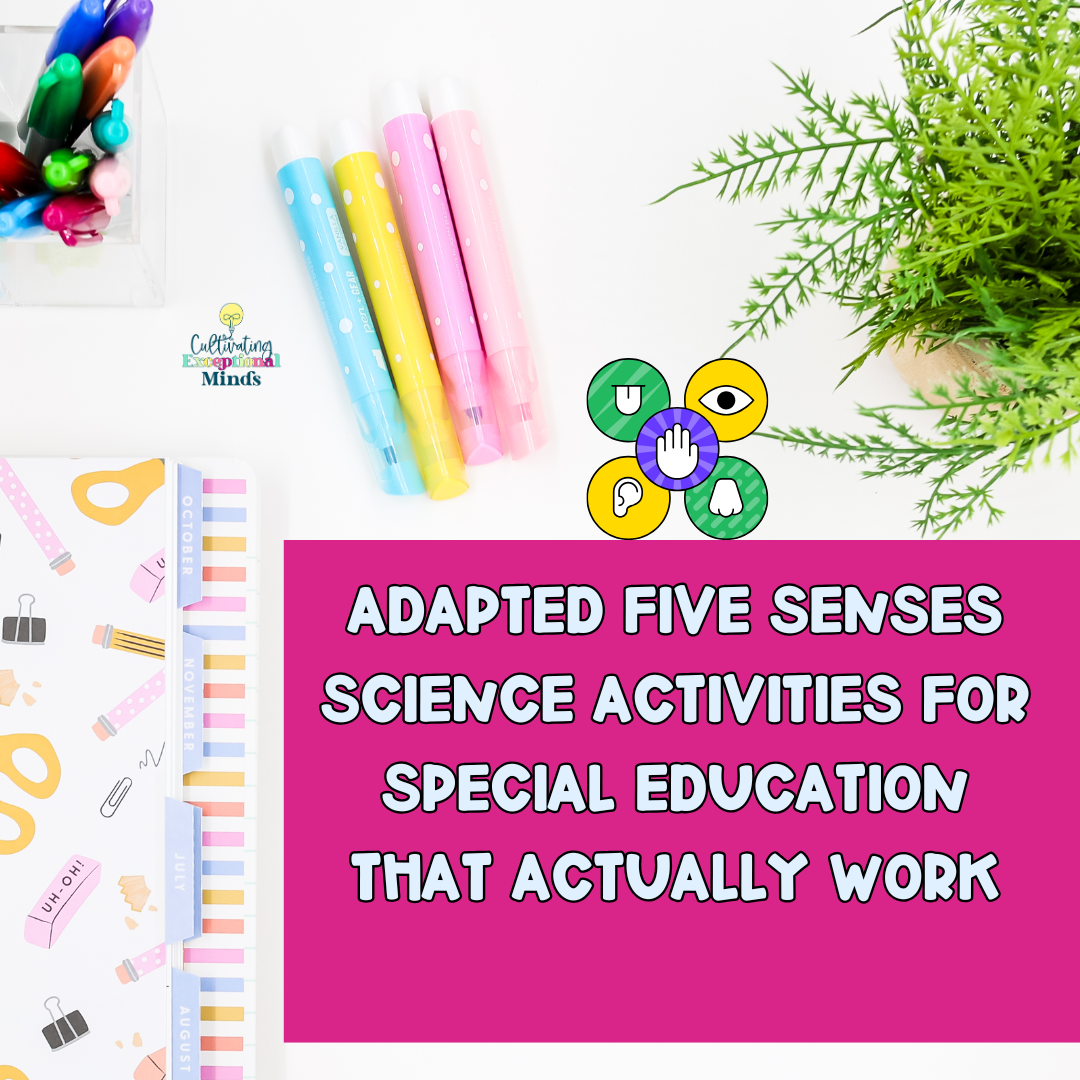
This blog post explores how to teach adapted five senses science activities for special education students. You’ll learn strategies for engaging sensory learners, using adapted tools, and implementing hands-on lessons that build understanding and confidence.
The Day the Classroom Smelled Like Popcorn
One Thursday, we popped popcorn in our classroom. Not just for snack time, but for science. As the kernels popped, my students giggled, pointed, and held their noses. One said, “It smells like the movies!” That day, we explored smell as part of our five senses unit. We didn’t just read about it—we lived it. And it stuck. That’s the power of adapted five senses science activities for special education.
What Are Adapted Five Senses Science Activities for Special Education?
Adapted five senses activities are science lessons that help students with disabilities learn through touch, sight, hearing, taste, and smell. In self-contained special ed classrooms, we use tools that are visual, repetitive, and hands-on. These lessons are designed to meet students where they are and help them grow.
How to Use Adapted Five Senses Activities in Your Special Education Classroom
- Pick One Sense per Week
Keep it simple. Focus on one sense, like “touch,” and build your week around it. - Use Real Objects
Let students feel soft cotton balls, rough sandpaper, or squishy stress balls. Real items bring the sense to life. - Add Visuals and Icons
Use symbol cards for each sense. Label with both words and pictures: a nose for smell, an ear for hearing, etc. - Repeat and Review
Practice the same sense each day with a different object or activity. Repetition helps build memory. - Make It Functional
Talk about how we use our senses at home or in the community: smelling food, listening to music, seeing traffic lights.
List: What’s Included in the Adapted Five Senses Unit
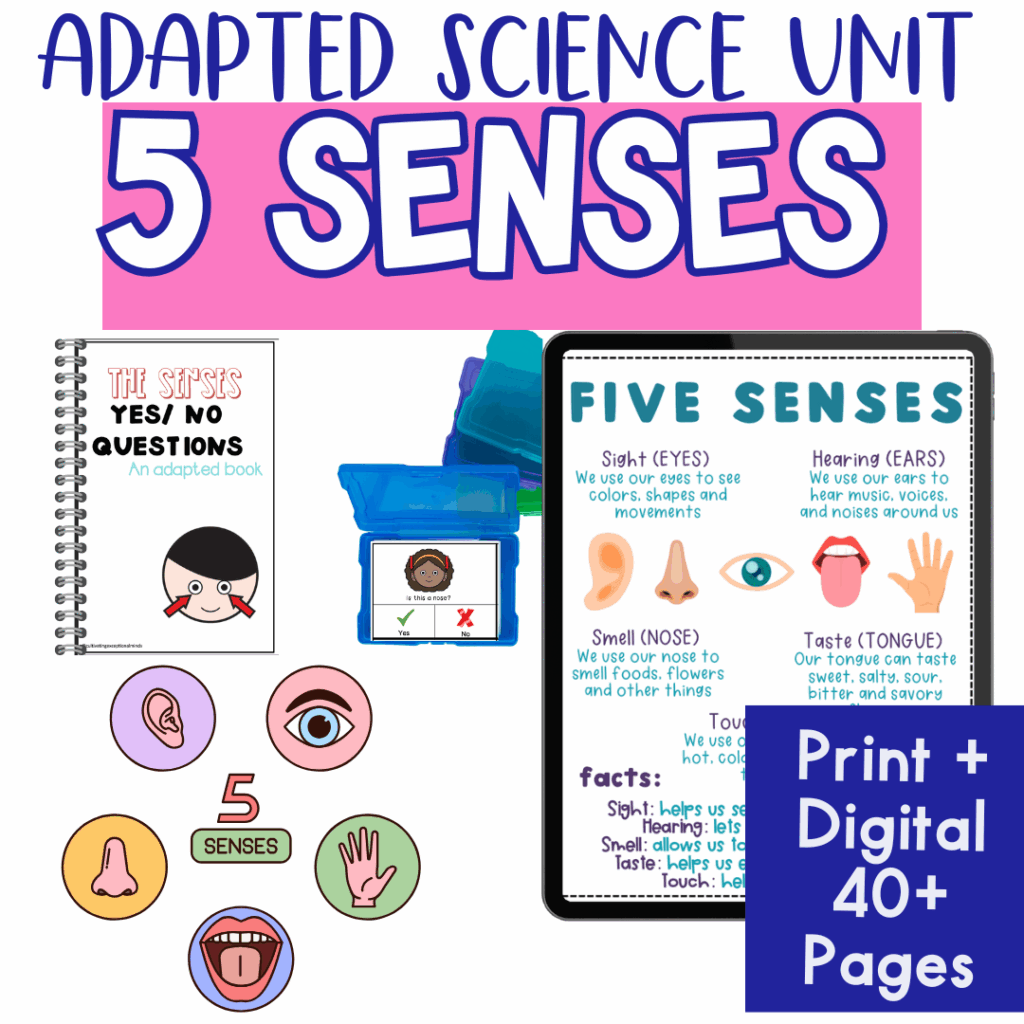
✅ Anchor charts for each sense
✅ Vocabulary visuals and icons
✅ Interactive books
✅ Matching and cut-and-paste worksheets
✅ Simple experiments like “What’s that smell?” or sound guessing games
✅ Google Slides for digital learners
Get the Five Senses Adapted Science Unit Here
A Story From My Classroom: The Hearing Game That Sparked Joy
We did a “Mystery Sound” activity where I shook jars filled with different items: rice, coins, beads, and beans. Students had to guess what was inside. One student who usually stayed quiet lit up and said, “That’s money!” He was right, and the whole class clapped. It was a turning point—he started participating more after that.
What if My Students Have Sensory Sensitivities?
Great question! Always provide options. Let students opt out of strong smells or loud sounds. Use visuals and social stories to prepare them in advance. Adapted five senses science activities for special education are flexible, so you can adjust based on each learner’s needs.
Where Should I Teach These Activities?
Adapted five senses lessons work great in:
- Whole group circle time
- 1:1 instruction
- Science centers
- Sensory bins
- Therapy sessions with SLP or OT
What’s One Way You Can Explore the Senses Today?
Could you try a smell test with mystery jars? Or maybe a texture walk with bare feet on carpet, tile, and grass mats? What would your students love most?
Grab a Free Sample or Two
Want a taste of adapted science? Check out this free science unit or try this home learning packet to see how these units work at home and school.
Why Adapted Five Senses Science Activities for Special Education Matter
Science doesn’t have to be complicated. These activities help build background knowledge, vocabulary, and even behavior regulation. Plus, they make learning FUN. And in a self-contained classroom, fun means engagement. Engagement means progress.
🌺 Shop the Five Senses Unit
📄 Explore More Science Ideas
📚 Join The Exceptional Collective for monthly content, trainings, and coaching
Need help teaching science or ELA in your self-contained classroom? Connect with Cultivating Exceptional Minds for tips, resources, and encouragement every step of the way.