





This blog post focuses on teaching earth’s physical features to special education students using visuals, hands-on learning, and differentiated materials. You’ll discover real classroom strategies, an easy-to-use TpT resource, free downloads, and practical tips for boosting science engagement in your self-contained special ed classroom.
Dirt, Mountains, and Learning That Sticks!
Have you ever tried to explain a mountain to a student who’s never seen one?
That’s what makes teaching earth’s physical features in special ed so unique. Our learners need to see it, touch it, move it, and talk about it—sometimes all at once. And when you use adapted materials, everything just clicks.
One year, I brought in a tray of sand, a plastic bowl, a rock, and a spray bottle. I said, “Let’s make a mountain and a valley!” The joy on their faces when the water ran between the hills was priceless. Suddenly, they weren’t just learning—they were living the lesson.
Why Teaching Earth’s Physical Features in Special Ed Matters
Earth science builds critical background knowledge. Students begin to understand where they live, what makes up their world, and how landforms affect people. It’s not just about facts—it’s about functional knowledge:
- Mountains = hard to climb
- Water = you need it to live
- Soil = where plants grow
And when you teach these concepts in an adapted way, you’re giving your students access to learning that sticks.
What’s in the Earth Features Adapted Science Unit?
Inside this ready-to-go resource, you’ll find everything you need to teach physical features:
- Visual anchor charts for each landform
- Adapted books with repetitive language
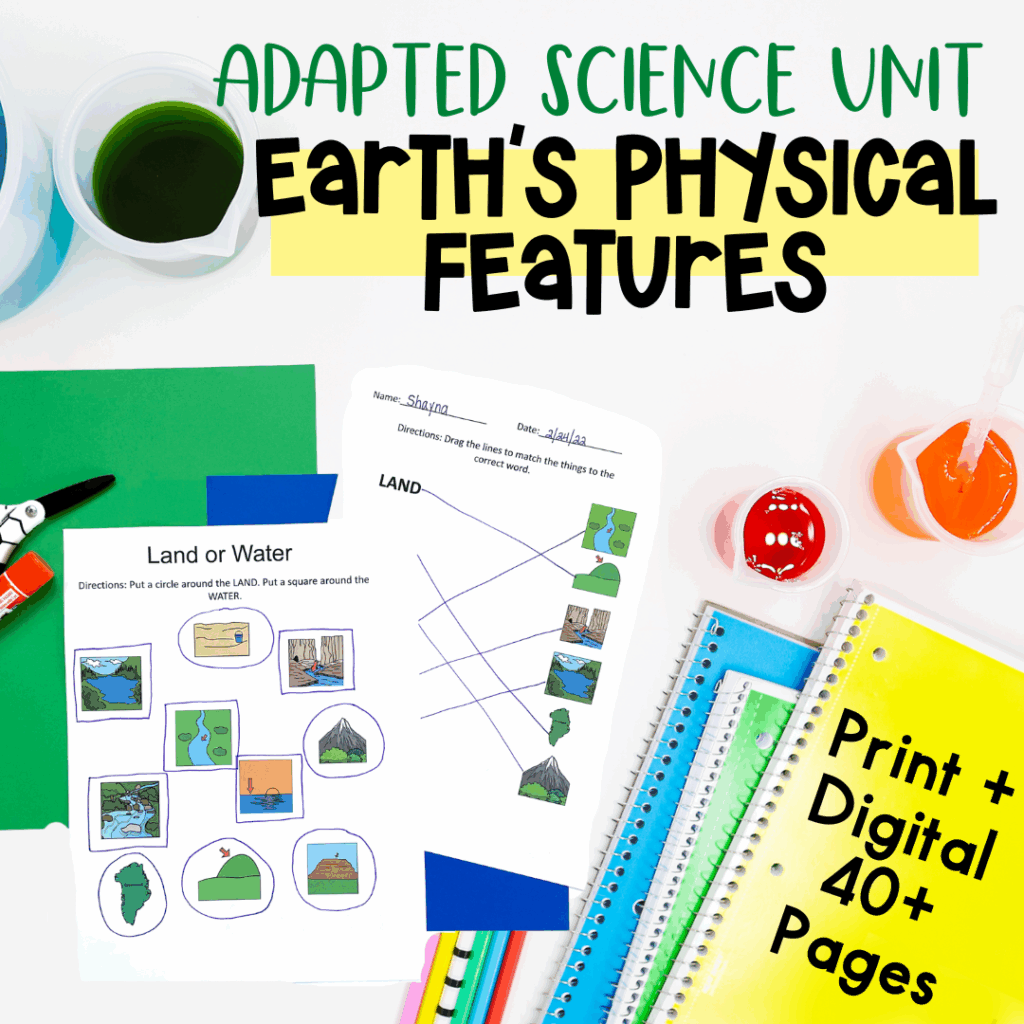
- Worksheets for matching and sorting
- Google Slides for digital learners
- Task cards and file folders
- A pre/post assessment
🛒 Grab the Physical Features Unit Here
Don’t Miss These Freebies! If you’re looking for more tools to help teach science in your self-contained class, grab these helpful freebies:
🧠 Science Freebie Starter Kit – Download it now and get visuals and supports for science instruction. Get it here.
🌱 Life Cycle of a Plant Freebie – Teach science content while supporting comprehension and vocabulary. Download it here.
How Can I Teach This to Students at Different Levels?
Use the same concept in different ways. While one student sorts pictures of rivers and mountains, another may point to “mountain” on a core board or trace the shape in a sensory bin. Use repetition, visuals, and partner work to bring everyone into the learning experience.
Sample Week Teaching Earth’s Physical Features
Here’s one way to use the resource across five days:
Monday: Read the adapted book. Show real pictures and the anchor chart.
Tuesday: Act it out with sand trays, blocks, and shaving cream mountains!
Wednesday: Do a cut-and-paste landform worksheet.
Thursday: Use task cards in small groups.
Friday: Watch a short earth science video and complete the pre/post assessment.
Support Tips:
- Use gestures and visuals.
- Model vocabulary daily.
- Give students time to explore the materials.
- Repeat the book multiple times across the week.
What’s Your Favorite Landform to Teach?
Do you love teaching about oceans? Valleys? Volcanoes? I want to hear your favorite activity or question! Leave a comment or tag me @cultivatingexceptionalminds on Instagram so we can swap ideas.
Where to Find More Support for Teaching Science
Need help beyond landforms? I’ve got you covered.
📚 Read more ideas here: How to Teach Science and Social Studies in Special Ed
📦 Want to simplify the whole year? Check out the full Adapted Science Units Bundle. View the Bundle
✨ Join The Exceptional Collective for monthly themed content, trainings, coaching, and a community that gets you. Join the Collective
Let’s Make Science Easier
Whether you’re teaching about mountains or the moon, you don’t have to do it alone. Grab the Physical Features adapted science unit, download your free resources, or get ongoing support from Cultivating Exceptional Minds.
You’ve got this. And I’ve got your back.